“Algorithm” and “Dopamine” are extensively used words in today’s world. I think “algorithm” is something most people talk about, sometimes without knowing what exactly an algorithm is!
Well! An algorithm is actually a technical term. Let me break it down for you:
In layman’s terms, an algorithm is essentially a set of well-defined steps or commands designed to solve a mathematical or computational problem. Algorithms are the fundamental elements for any computer program that instruct a computer how to perform calculations, process data, or make decisions.
Any computer program comprises finite steps to be completed in a specific order. And, this, in a nutshell, is an algorithm.
But an algorithm is not restricted to computational problems or computers. In fact, we as humans follow specific steps to complete a task, or we follow algorithms. For instance, when you make tea, you may follow steps: boiling water, adding tea leaves, brewing, adding milk, etc. So this becomes an algorithm. Similarly, simple everyday tasks like tying shoelaces, wearing clothes, following a recipe, etc., follow a specific sequence of actions or an “algorithm”.
Now that we have an idea of what an algorithm is, why is everyone talking about it?
Let’s see how the word is used in common conversations today!
The algorithm knows me!
I don’t know what the algorithm wants from me!
The Instagram algorithm keeps on showing me such reels!
Or, the algorithm does not rank my content.
Create content that the algorithm will promote, etc., etc.
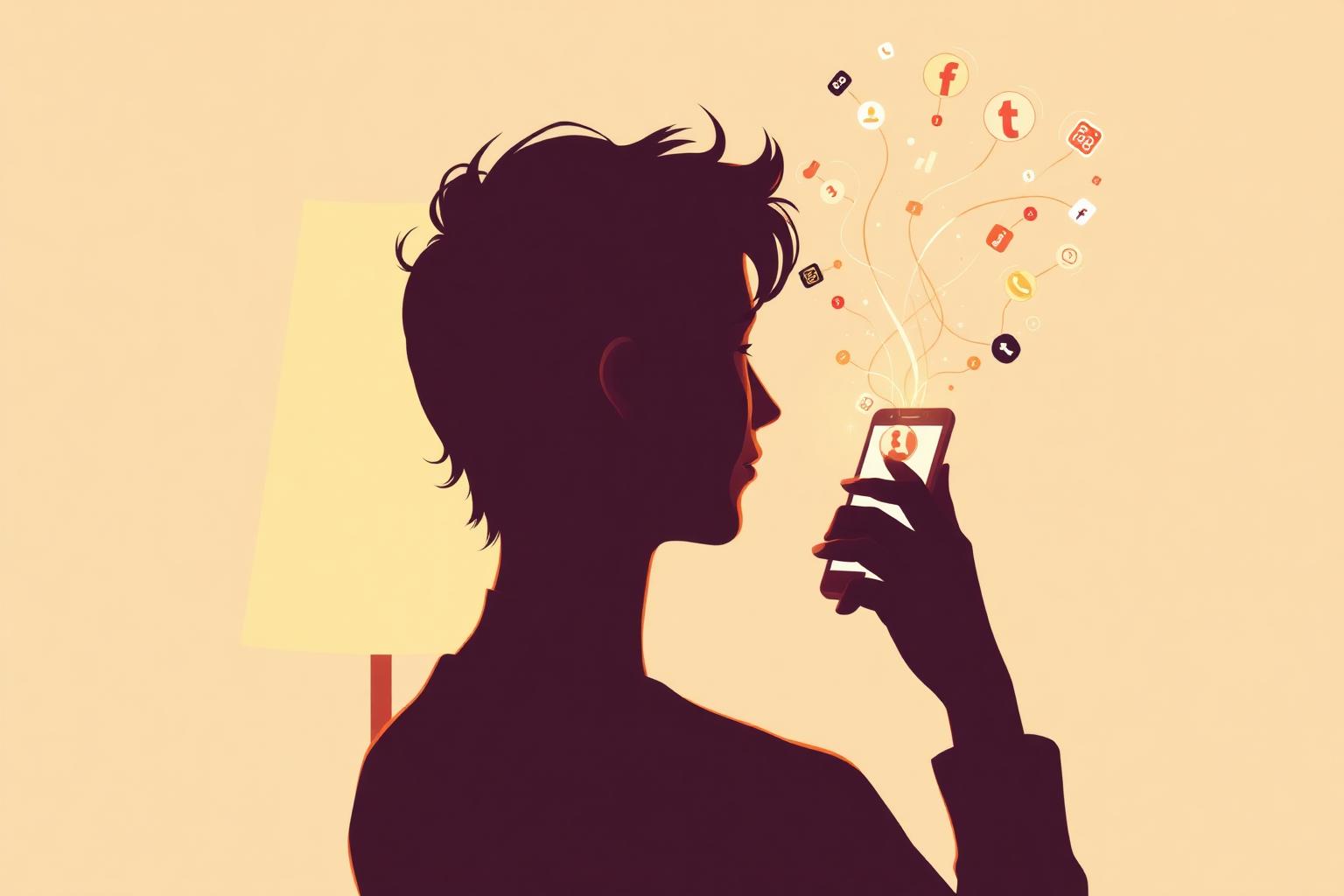
Based on the definition of algorithm, these statements imply the specific set of instructions given to Instagram/TikTok or YouTube regarding the kind of content you will be interested in. For instance, if you watch stand-up comedy shows, the algorithm will show more comedy shows by the same comedian or similar ones. This is where the statement “the algorithm knows me” becomes relevant. This statement means that the algorithm knows what I like to watch and keeps on showing me content aligned with my choices. This is true because AI (Artificial Intelligence) can easily interpret your choices and curate the content accordingly on your feed. Since you like the content, you keep scrolling, and content of your choice keeps popping up, which is why you keep scrolling till the wee hours of the morning. The algorithm definitely knows how to keep you on the platform.
Now coming to the second category of statements regarding algorithms, “the algorithm does not rank my content,” which is relevant for creators. Whenever we create content on any platform, we want people to see it and like and comment. But many creators are not fortunate enough to get enough views and get dejected. The algorithm does not promote your content in such cases because the algorithm is programmed to show specific types of content to its audience. The algorithm may not rank your content for several reasons: content may not be of good quality, there may not be enough demand for the type of content, etc. It becomes very difficult for a new creator to find an audience if they create content that differs from popular content. For instance, Instagram may reward dance videos and promote them even though an individual may not have actually searched for such content. But the algorithm “knows” that such content has a higher probability of becoming popular, so dance videos of random creators might show up on your feed. As a result, you will find many creators who started their social media journey by posting a specific type of content slowly switch to a popular type of content because, unfortunately, that is the only way to grow your online presence. The problem is that these creators may start posting popular content to build a following; they hope they can return to their core content once they have a certain number of followers. Unfortunately, the algorithm doesn’t work this way. Once you post something different, the algorithm will not promote you. Also, since you have built your following on a certain type of content, it is unlikely your followers will be interested if you post something other than what they expect from you.
In a nutshell, algorithms are designed to show you content you like and promote content that is popular!
Now comes the question: why do we keep on consuming the content that the algorithm shows us? Why do we find it hard to switch to other types of content?
This is where DOPAMINE steps in!
What is Dopamine?
Dopamine is a chemical messenger or neurotransmitter released by the brain that generates feelings of pleasure, helps you stay focused, and makes you repeat the same actions that secrete this chemical. It drives motivation, movement, and reward.
Simply put, dopamine is a chemical released by the brain that creates a feeling of pleasure when you perform certain activities. It urges you to repeat the same action/activity so that you can continue to feel that pleasure. Dopamine is released for any activity that gives pleasure, such as consuming alcohol/drugs, gambling, etc. It is one of the main factors for causing addiction.
So, when you consume content online, dopamine is released, and you feel happy, and then you keep scrolling so that that happiness continues.
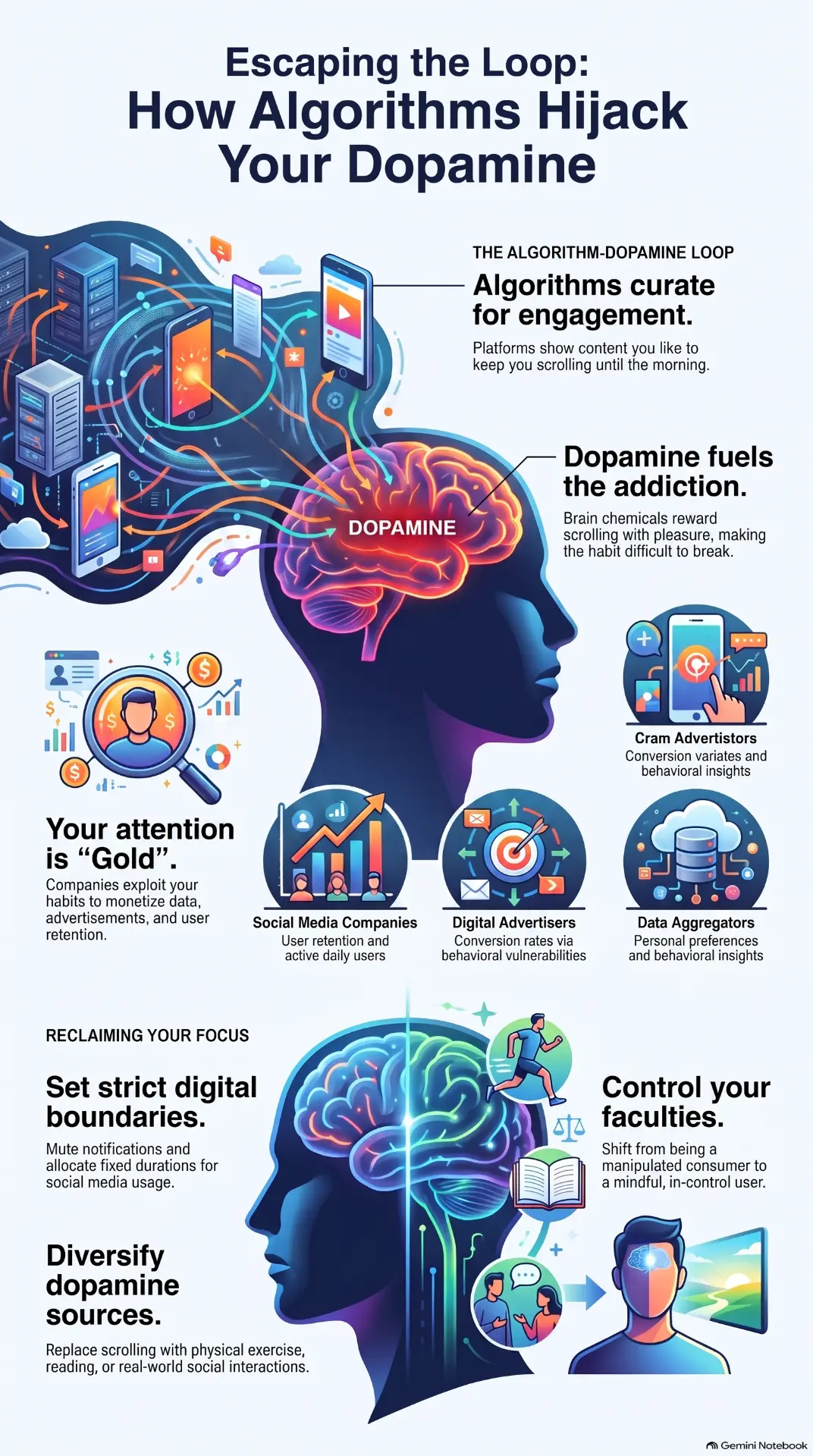
This is how this loop works:
- The algorithm shows you the type of content that you like.
- The brain releases dopamine, and you feel happy.
- So, you stay on the platform because the algorithm shows you more content that makes you happy.
This is why I call it algorithm-driven dopamine.
The algorithm controls your actions by simply providing you with what you like. You may feel that the platform is making you happy, so what is wrong?
The problem is that doomscrolling causes a lot of problems:
Reduces Attention Spans
Most people consume short-form content because the algorithm continually shows similar content by different creators. This reduces our attention spans because we lose patience for consuming content that lasts more than 3 minutes. In fact, we often do not even complete the 3-minute reel because we want the next reel. This affects our ability to focus on tasks that require time and patience, like reading, writing, or even consuming long-form content.
Clutters Our Mind
When we continuously consume short-form content, our brains process vast volumes of data, which clutters our minds with irrelevant information that may not add value.
Leaves Us Exhausted
When our brain is continuously processing vast amounts of data we feed it, it gets exhausted. It leaves us feeling tired, and we find it difficult to perform other activities. Often, we do not know why we are feeling tired; we turn to our smartphone for more content, believing that it will help us unwind.
Insomnia
One of the obvious problems caused is lack of sleep. The algorithm and dopamine cycle keep you so engrossed that you lose track of time and lose sleep just because you are doomscrolling.
Brainrot
It is said we become what we consume. And if we continuously consume things that don’t add any value, our brains degrade, and our capability to think rationally and analyze is negatively impacted.
Makes Us Biased
If the algorithm continues to feed us content we like, our worldview gets restricted to what we are watching, and we feel that what we believe is true. We lose our objectivity to acknowledge that there can be another perspective. This is especially true of political content. If your views align with what a political party propagates, your perspective will be strengthened by repeatedly watching similar content. Your mind will lose the capability to view the content of the other side objectively. This approach is used by most political parties to propagate their agenda. This leads to polarization. In recent years, we have witnessed highly polarized views from both sides leading to disharmony and chaos in the world.
All this illustrates that we have become slaves to our dopamine, and the algorithm is manipulating us!
The question is who benefits from this manipulation?
It is definitely not us, the consumers!
It is social media companies, digital advertisers, data aggregators, and content creators who monetize our attention.
Let’s see how:
- Social media companies: Our addiction helps social media companies maximize daily active users, extract user retention metrics, and more.
- Digital advertisers: Advertisers often exploit our vulnerabilities by displaying products when we are impulsive to enhance conversion rates.
- Data aggregators: Data aggregators can extract valuable behavioral insights based on user interactions that reveal personal preferences.
- Content creators: They leverage our addiction to secure brand sponsorships and boost validation metrics.
It is said, “Attention is Gold,” and we are innocently handing over gold to these entities. We believe we are entertained or educated, but in reality we are just playing into the hands of these entities, revealing our personal data.
The question is, “Is it worth it?”
The solution is not to stop using social media. The solution is to use it such that we are not being manipulated or exploited. We need to ensure that we are in complete control when using social media.
How?
- Reducing screen time by allocating fixed timings and durations for social media.
- Muting notifications.
- Investing time and energy in physical activities like exercise, yoga, etc.
- Spending time with people.
- Spending time with yourself.
- Reading.
- Listening to music, etc.
- Indulging in activities like cooking, cleaning, etc.
Basically, we need to alter our source of dopamine instead of depending on algorithms for dopamine.
Finally, it is in our hands whether we get controlled by the algorithm or we control our faculties.
Read Social Media Tomfoolery for more!